Atmel Studio 6.2 Download Mac
Since its initial launch in 2002,megaAVR microcontrollers (MCUs) have become the go-to choice of Makers everywhere. Ranging from the uber-popularATmega328 toATmega32U4, the chips can be institute at the middle of millions of gadgets and gizmos, including an entire lineup ofArduino boards, 3D printers like RepRap and MakerBot, and innovative DIY platforms such as littleBits, Blank Conductive and MaKey MaKey. Heck, they've even captured the hearts of glory creator Sir Mix-A-Lot!

Designed for engineers of all levels from the professional person developers to the Maker community, the 8-bit megaAVR MCUs are ideal for applications in a variety of markets — automotive, industrial, consumer and white goods.
Today, we are excited to announce the next generation of this incredibly-popular family, with the debut of new 8-bitmegaAVR MCUs. Spanning from 4KB to 16KB Flash memory, the new devices provide next-generation enhancements including additional analog functionality and features for the latest low-ability consumer, industrial, white goods and Internet of Things (IoT) applications.
This expansion of megaAVR family unit will deliver all the benefits of previous generations including a unproblematic, easy-to-utilise interface for a seamless upgrade and binary compatibility with existing 8-bit megaAVR MCUs.
"With over twenty years of MCU feel, nosotros are proud to launch our tertiary generation of 8-bit megaAVR MCUs to the market today—a family that has been highly recognized by a variety of communities from the professional designers using our Atmel Studio ecosystem to the hobbyist and Maker in the AVR Freaks and Arduino communities," explained Oyvind Strom, Atmel Senior Marketing Manager. "Every bit the leader in the 8-chip MCU marketplace, Atmel continues to add piece of cake-to-use, innovative products to our broad portfolio of MCUs."
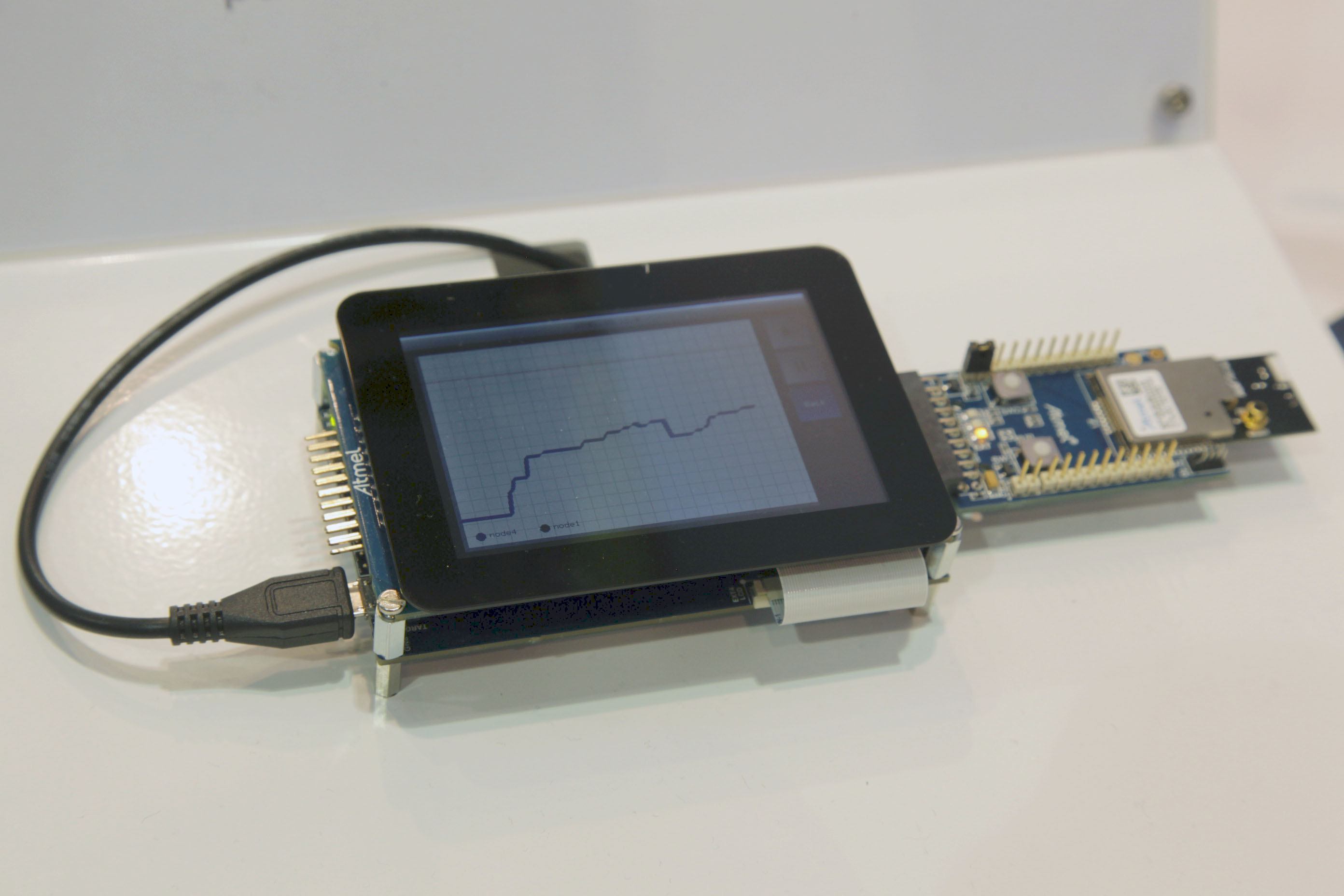
Key features of megaAVR MCUs include:
- Simple, like shooting fish in a barrel-to-use
- Low power
- Broad selection of development tools including freeAtmel Studio IDE
- Extensive fix of peripherals, including ADC, Analog Comparator, SPI, I2C and USART
- Single-cycle instructions running 1MIPS per MHz
- Designed for high-level languages with minimal code space
- Existent-fourth dimension performance with single bike I/O admission
Among a number of other new attributes:
- Unique ID for every device enabling a more secure device for IoT applications and wireless networks
- Improved accuracy of internal oscillators for UART serial communications
- Enhanced accuracy of internal voltage reference for better analog-to-digital conversion results
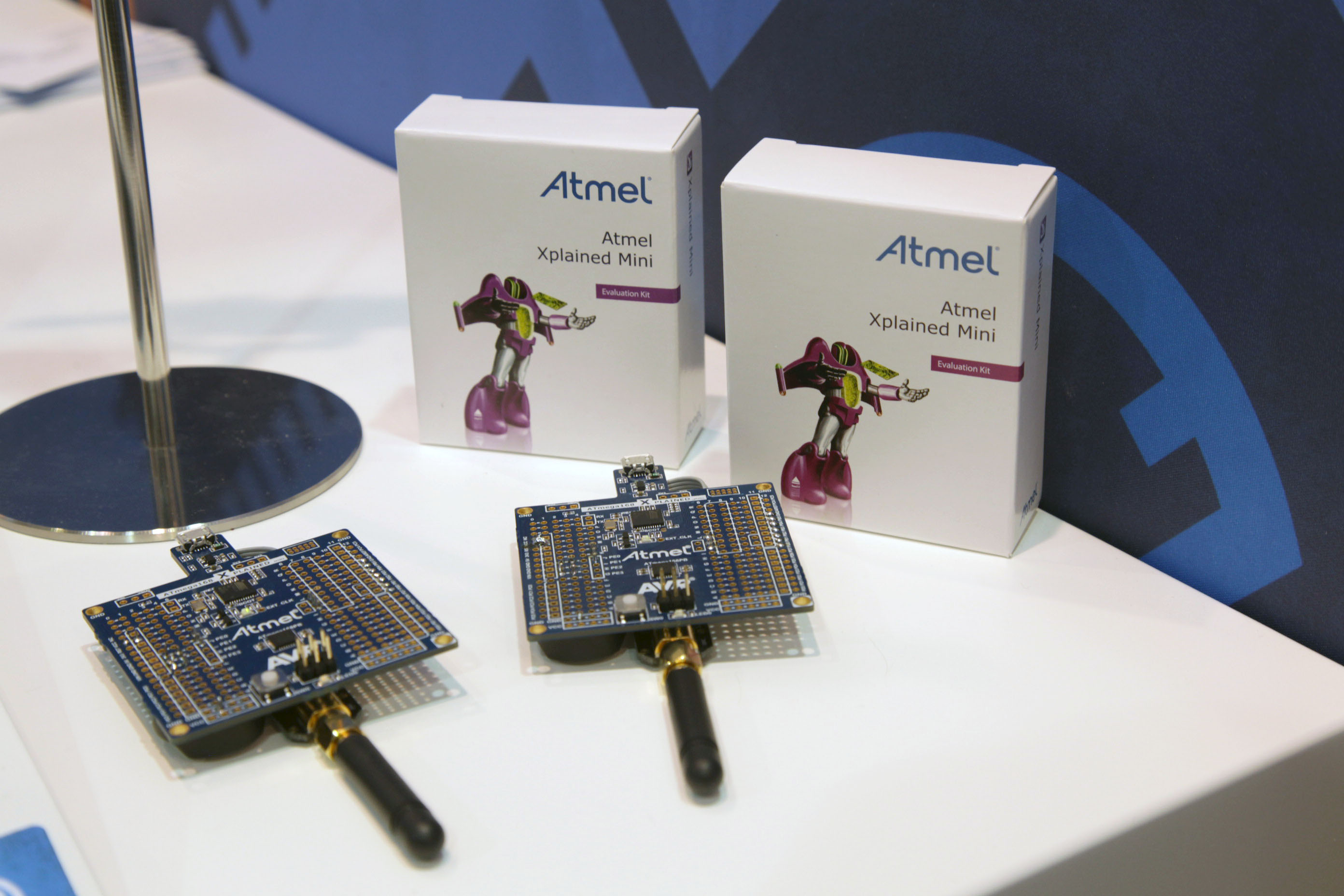
Makers seeking to accelerate their design are encouraged to check out our ultra-depression priceXplained Mini development platform, which is currently available for but $8.88 USD (see what we did at that place?) in theAtmel Store and fully compatible with eight-scrap megaAVR MCUs. The new boards can easily exist connected to any Arduino board making information technology ideal for a multifariousness of projects and prototypes using an Arduino board.
The megaAVR viii-fleck MCUs are fully supported by Atmel's development eco-system including Atmel Studio 6.two, the integrated development environment (IDE) for developing and debugging Atmel | SMART Cortex-M and Atmel AVR MCU-based applications. Atmel Studio vi.ii gives designers a seamless and easy-to-use environment to write, build, simulate, programme and debug their applications to write, build, simulate, program and debug your applications written in C/C++ or assembly lawmaking using the integrated GCC compiler and AVR assembler. With Atmel'due south broad portfolio of AVR products and easy-to-employ evolution software, designers tin can quickly bring their 8-scrap MCU to market. Additionally, designers have admission to the company'due south embedded software including the Atmel Software Framework and application notes, and theAtmel Gallery app store.
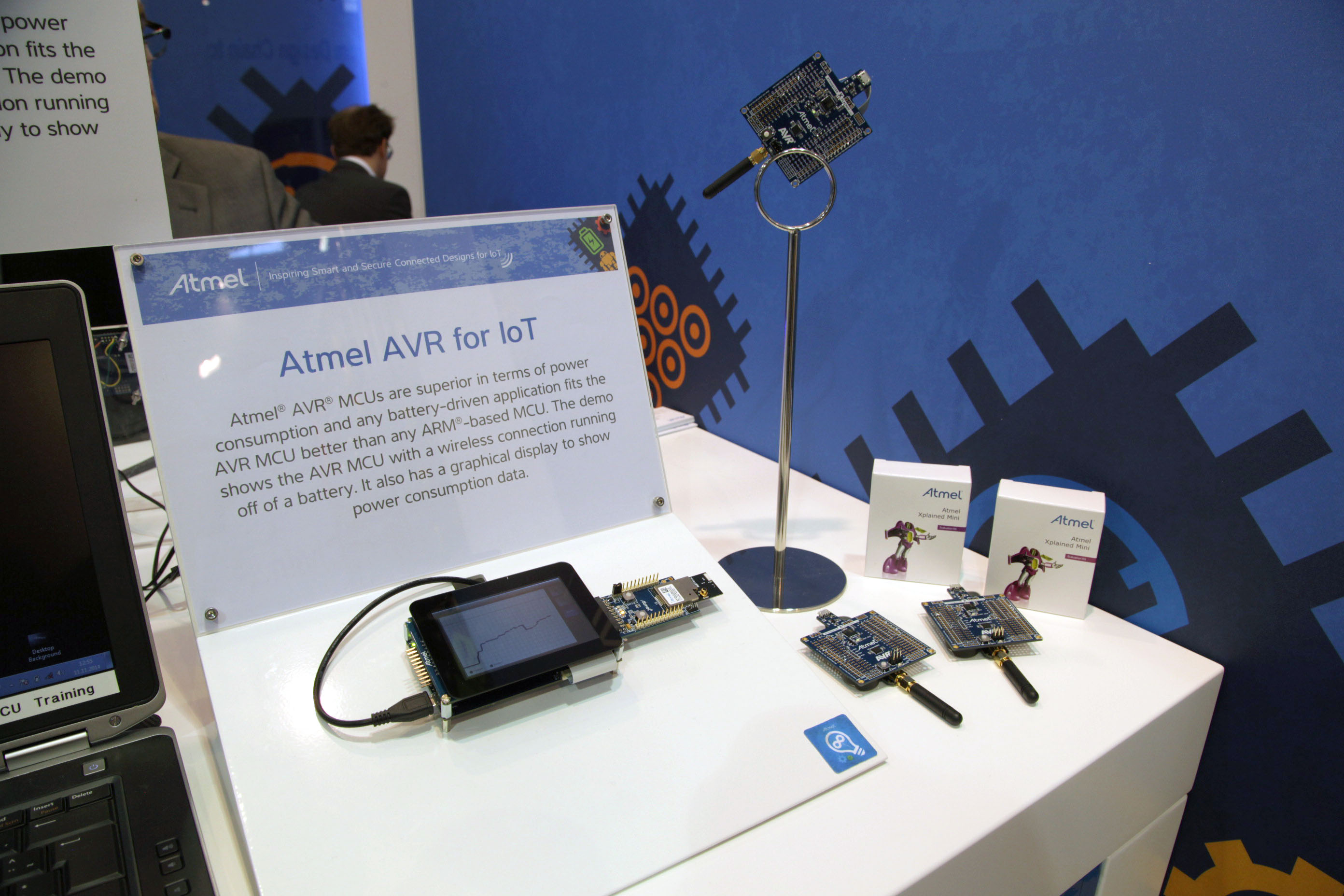
Currently on brandish at Electronica 2014, the Atmel mega168PB, mega88PB and mega48PB are now available in 32-pin QFN and QFP packages with additional devices slated for later this year. All devices are sampling at present. Product quantities for the mega168PB devices are available now while the mega88PB and ATmega48PB devices will be bachelor in Feb 2015.
Desire to explore the AVR microcontrollers a scrap further?Head on over to the official folio. Those wishing to learn more about the backstory and inspiration of the Maker Movement's favorite 8-fleck MCU tin do so from the co-inventor himself hither.
You accept probably run across this scenario before: Direction or the marketing section approaches you asking you to add together wireless functionality to an existing product, or to develop a new product that needs to exist able to back up a wireless link. Today, at that place are many wireless technologies and options to consider.
It is likewise quite possible that marketing has already made part of that decision for you lot.
The marketing requirement may stipulate that you use Wi-Fi, Zigbee, 6lowpan or Bluetooth low free energy (BLE). Or, maybe marketing has no idea what is required, and just tells you to implement a wireless link!
Then, after a number of meetings and conference calls, you determine to use a solution that is based upon 802.15.4. This could include Zigbee, 6lowpan, Wireless HART, ISA100.11a, Openwsn, Lwmesh, among many other wireless stack solutions that all require an 802.fifteen.4 compliant transceiver.
At this point you would need to decide if your solution, or the protocol you've selected, will operate in the ii.4 GHz band or in a SubGhz band. There are times when you will demand to do some experimentation or RF functioning evaluations to make up one's mind which RF band to use in your particular situation.
When evaluating Atmel 802.fifteen.iv wireless solutions, the kickoff tool you should plow to is Wireless Composer. Provided every bit an extension to Atmel Studio 6.x, the Wireless Composer is a gratis tool. In order to make information technology elementary, each of the electric current Atmel 802.15.4 evaluation kits/platforms comes with a Functioning Analyzer firmware application pre programmed into the kit. Running on the evaluation kit, this Performance Analyzer firmware is designed to communicate with both the Atmel Studio and Wireless Composer extension.
Some of the capabilities of Wireless Composer include:
- Energy Scan:Browse selected or all available 802.fifteen.4 channels
- PER (Bundle Error Charge per unit) Testing:Transmit and receive 1000'due south of frames at a specific TX power level and RF channel and and then review the results for errors (dropped bits/frames) while also evaluating throughput metrics.
- CW Exam Modes:Identify a device in a Continuous test mode to monitor emissions with a spectrum analyzer or other RF test equipment
- Antenna Evaluation:Provide a Large Digital Brandish to permit testing antenna radiation pattern'southward at distances of upwards to around iii meters from the device connected to the laptop PC.
- Range Testing:Gather and log range data generated from a wireless link ready between two nodes — this data includes RSSI (ED signal strength) and LQI (signal quality) from both sides of the RF link.
Here are a few additional instance screen captures, bachelor from within Wireless Composer.
Energy Detection Scan Style:

Screenshot of Wireless Composer, an extension of Atmel Studio 6.x – Energy Detection Scan
Have you ever wanted to set some RF tests and wanted to know if there were other transmissions already taking place on the channel you intended to examination on ? Maybe your colleagues are performing tests in another department of the lab or building, or mayhap at home you have Wi-Fi or Bluetooth or habitation automation devices operating in shut proximity to where yous want to run some experiments. The ED scan mode, as shown here, allows you to get a quick glimpse of what RF action is happening around you lot. You tin do a one time scan or y'all can configure the test to continuously scan one or all channels and repeat this until you cease the test.
PER Test:
A common RF test to perform on a packet based wireless communication system is a PER (Package Error Rate) exam.
This test mode allows you to configure operation on a detail channel, at a specific TX power level, using a selected antenna option. You are and then provided the ability to fix the number of bytes to send in a transmitted frame, and to fix how many frames you lot are going to send during the examination. All of these parameters are configured in the left hand Transceiver Properties Pane, as shown in the capture below. Once the examination is performed, the correct hand window provides information regarding the results of the test.
This can exist useful for confirming RX sensitivity parameters, and information throughput characteristics under different atmospheric condition. Here is an example of sending 1000 frames and achieving zero errors using a frame length of 20 bytes.

Screenshot of Wireless Composer, an extension to Atmel Studio 6.2 – Packet Error Rate exam mode
Continuous Transmission Exam Mode:
If yous have attempted to develop a wireless RF production before, you lot know that a considerable amount of time will be spent performing regulatory pre – browse certification testing. This typically involves configuring your device to transmit a continuous wave RF emission on a particular RF channel using a specified amount of Transmit ability. The RF emissions are monitored using a spectrum analyzer or other RF exam equipment. To aid salve time and provide a useful tool, Wireless Composer provides a Continuous Manual Tab that allows option of a few unlike tests of this type.
In the instance shown beneath, an unmodulated CW test manual has been started on channel xvi using a TX power level of +4dBm. These are no results reported here, because all measurement results would come from observing the RF test equipment that monitors the RF emissions.

Screenshot of Wireless Composer, an extension to Atmel Studio half-dozen.2 – Continuous Wave test style
Antenna Evaluation Range Test Numerical Display:
For whatever wireless product, the antenna is one of the most important sections of the design. A great radio with a poor antenna results in poor product operation, while a mediocre radio with a peachy antenna tin end upwards with very adept performance. Then, one of the tasks for any wireless production programmer is to understand the characteristics and operation of his antenna blueprint. This may exist some type of on board antenna similar a ceramic bit antenna, or a pcb trace antenna, or it only may exist connecting an external antenna to an RF connector mounted on the product'southward pcb. Many on board antenna designs are shortened quite a fleck to reduce the footprint or space required by the antenna. This usually will impact the functioning of the antenna in a negative way, or at a minimum create directivity to the antenna'southward radiation pattern. A prissy capability of Wireless Composer is the ability to allow you to place the device connected to the PC, running Wireless Composer, on a table or tripod at a specific height above the floor in an open indoor or outdoor area. Then, in the range test tab within Wireless Composer, select "Numerical " every bit the brandish fashion. This will then display a screen every bit shown below.
1 would then take a battery operated mobile node virtually iii meters abroad from the PC brandish and watch the values being displayed for ED/RSSI and LQI modify as y'all rotate or change the orientation of the antenna with respect to the unit at the other end of the link. This brandish shows the LQI and ED/RSSI values at both ends of the link and tin can be used to examine any changes in antenna pattern, every bit the device orientation is inverse. Knowing what orientation provides the best signal levels will later help yous understand how to position the unit of measurement when mounting it at its final location. Yous will too acquire information on how to set up additional range tests where y'all could exist up to one mile away, and all y'all accept is a blinking led to signal whether or not you lot even so have communications with the unit of measurement under exam.

Screenshot of Wireless Composer, an extension to Atmel Studio half-dozen.two – Range Test Numerical Display
Range Test Log With Multiple Markers (Push button Push button Marker Recording):
Wireless Composer as well has a range examination mode for logging signal level and quality to a PC display or to an Excel file, as shown in the screen capture below.
When two paired devices are configured in this range exam mode, the unit of measurement connected to the PC will periodically (about every two seconds to conserve battery life) send a beacon type frame to the mobile unit, at which point the mobile unit volition ship back a answer to the logging device. This activity can besides exist seen in the screen capture below.
The LQI and ED (boilerplate RSSI) levels for each side of the wireless link are recorded with a time stamp to an Excel file.
Take you always tried to exercise an RF range test by yourself? If you accept, and so you know that it sometimes can exist difficult to set a exam, such that you lot tin leave one node at a fixed location and have the other battery operated mobile unit to various locations where you want to assemble indicate level and link quality data.
This is specially true when your simple wireless device lacks whatsoever type of user interface, or display attached to it, equally in the case of a wireless sensor, or an uncomplicated evaluation board. This becomes even more hard if you are doing LOS (line of sight) measurements outdoors. The performance analyzer app simply assumes yous take access to 2 IO pins — i is typically an input for a push or jumper, while the other is an output for an LED.
Outdoor LOS measurements may allow y'all to achieve distances of hundreds of meters, as well every bit one or more miles in the SubGhz RF bands.
To brand this measurement task a lot easier, the operation analyzer app has the power to enable you to press a push on the battery operated portable unit of measurement that you have in your manus, and have this RF device ship an RF frame back to the unit connected to the PC that is doing the logging; as a upshot, that marker frame is recorded into the log, allowing you to place marker indicators for time and place in the log file. This will enable you to make up one's mind where you accept been when y'all return to review the log information.
For instance, yous could printing the button in one case while at a specific location in room A, and so printing it twice in for a location in room B. Or, if yous are outdoors you could press the push button and insert markers at various distances as yous move away from the logging unit. Then, all you would accept to write on your notepad while doing the test would be the proper name of your location (or the distance at which y'all were abroad from the logging unit of measurement) and the number of times you pressed the push button at that location.
Upon your return to examine the recorded log, y'all'll have all of the necessary data to empathize the recorded results, including where in space and time the measurements were made.
See the example below:

Screenshot of Wireless Composer, an extension to Atmel Studio half dozen.ii – – Recorded Logs
For each of the supported wireless platforms, Atmel Studio contains complete example projects with source files for the performance analyzer application. When you are finished making measurements on an Atmel evaluation lath that yous used to assist make device selection or RF band selection decisions, you lot tin then utilise this same application with perhaps some minor modifications to back up your ain final hardware design with regards to the IO assignments for a push button or led. This functioning analyzer application along with Wireless Composer have proven to be very useful when performing tests on first image boards, and even for use in performing FCC or other governmental regulation pre-scan testing.
Interested in learning more? Yous tin admission Wireless Composer here and Atmel Studio here.
Yesterday, Atmel execs detailed the company's Q1 2014 highlights. Cardinal launches, collaborative projects and product wins spanned multiple markets, including:
Winning with maXTouch (smartphones) – LG's G Pro 2, G2 Mini and L Serial 3 L90; Verizon's Lucid 3, Xiaomi'south RedRice 5.five″, Gionee's Elife S5.5 and ZTE'south M Due south Calorie-free.
Winning with maXTouch (Android and Windows eight tablets) – Samsung'due south Galaxy Tab 4 10.one," Milky way Tab 12.2," Galaxy Annotation 12.2″ and HP'due south EliteBook 1000 G2.
Collaborating with Corning – Developing ultra-thin, next-generation capacitive touchscreens using Gorilla Glass and XSense.

Working with Mentor Graphics – Accelerating development of next-gen IoT devices using Atmel's ARM-basedCortex M3 and M4 based microcontrollers under the auspices of the Embedded Nucleus Innovate Program.

Launching maXTouch 1066T and 1068T – Extending production leadership in the large screen capacitive touch marketplace with devices targeted at vii″ – 8.9″ high performance tablets.

Introducing the new automotive maXTouch S lineup – Targeting touchscreens up to 14″ in center consoles, navigation systems, radio interfaces and rear-seat entertainment systems.

Debuting the SmartConnect platform – Integrating Atmel's ultra-low power microcontrollers (MCUs) and wireless connectivity solutions into turnkey solutions for the Internet of Things (IoT).

Introducing new depression-ability ARM Cortex M0+ microcontrollers (SAM D21, D10 and D11) – Offering Atmel's peripheral event system, back up for capacitive touch button, slider and cycle user interfaces, multiple serial communications modules, along with a full-speed USB interface, also as boosted pivot and retention combinations.
Unveiling new $79 SAMA5D3 Xplained evaluation kit – Providing a depression-cost, fast prototyping and evaluation platform for microprocessor-based design built around Atmel'due south SAMA5D3 ARM Cortex-A5 processor-based MPU.
Xplaining 8-flake evolution– Offering a evolution lath for Makers and engineers based on Atmel's eight-bit AVR technology.

Launching the ATPL230A – Introducing a Power line Communications (PLC) modem designed to implement the physical layer of the Prime number standard (Power Line Intelligent Metrology Evolution).

Rolling out Atmel Studio half dozen.ii – Upgrading the popular integrated development environment for Atmel AVR and ARM based microcontrollers.
Ramping up with LIN – Extending Atmel's automotive in-vehicle networking leadership position with the launch of side by side-generation, low-power local interconnect networking (LIN) systems.

Atmel has confirmed that information technology will be launching 6 new 4k-16k Flash devices in its flagship AVR Mega MCU family during the 2nd quarter of 2014.

"With over two decades of MCU experience and leadership, Atmel is investing in innovative technologies and ideas to enable product differentiation for viii- and 32-bit embedded MCU designers," said Reza Kazerounian, Senior Vice President and General Managing director, Microcontroller Business organization Unit, Atmel Corporation .

"[Nosotros] evangelize highly sophisticated, yet easy-to-use 8-bit AVR MCUs assuasive everyone from professionals, hobbyists, students and makers to develop embedded designs that could lead to the next 'killer app' in the dawn of the Internet of Things (IoT)."
As Reza notes, Atmel has a long tradition of investing in the Maker community, with the vast majority of Arduino boards on the market powered by Atmel's versatile AVR MCUs.
"As a leader in microcontrollers, we are committed to providing differentiated MCUs that are easily accessible and easy-to-employ for all communities," Reza explained.

"With over 200,000 loyalists in our AVR Freaks community and one.two million Arduino development boards in the Maker customs, our AVRs accept definitely made a significant impact in today'southward Maker and hobbyist circles. With over 65,000 active users in our Studio 6 integrated development surroundings, we are making it easier for all designers to access our tools."
The new AVR MCUs – manufactured using advanced 130-nm CMOS technology – will be fully supported by Atmel Studio six.2, the integrated development platform for developing and debugging Atmel ARM Cortex-M and AVR MCU-based applications.
"The new devices will deliver a unique combination of performance, ability efficiency and design flexibility. Optimized to expedite fourth dimension-to-market, they are based on the industry's most lawmaking-efficient architecture for C and associates programming," Reza added.

"[Our] extensive AVR portfolio, combined with the seamlessly integrated Atmel Studio development platform, makes information technology easy to reuse cognition when improving designers' products and expanding to new markets."
Interested in learning more about AVR? Yous tin cheque out our comprehensive device breakdown here.
Atmel Studio 6.2 Download Mac
Posted by: danielsnorn1961.blogspot.com
Post a Comment